Affective language transcends mere words; it includes the emotions that shape them. By conveying feelings, writers can deepen connections with readers, making writing more impactful and meaningful.
Without affective language, words can feel flat and cold. Experts say even nonverbal cues like facial expressions carry up to 55 percent of the message's impact. For instance, a warm smile turns a basic hello into a true welcome. It invites others to open up.
Similarly, writers embracing their own feelings in affective language changes everything. They will not hide sadness or joy. Instead, they share them to draw readers closer. Bonding with the writer grows stronger. Misunderstandings fade as affective language builds readers’ trust in writers who convey truthfully feelings that evoke their emotions.
In daily life, this matters a lot. By leaning into these feelings, writers make every writing richer with affective language. In essence, affective language breathes life that makes readers feels more linked to what the writer wishes to communicate.
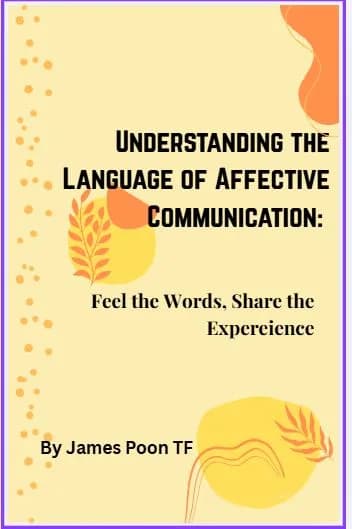
This eBook ‘Understanding the Language of Affective Communication: Feel the Words, Share the Experience’ explores various affective elements in literature, including metaphors, similes, allusions, irony, pathos and humour. It delves into how these components contribute to the emotional resonance of facts and the essence of literary works. Additionally, it examines the symbolic experiences that arise from the interplay between science and literature, as well as the primary ways readers can connect with characters within narratives.
Understanding the Language of Affective Communication
Feel the Words, Share the Experience
by James Poon TF
Details
James Poon TF
45